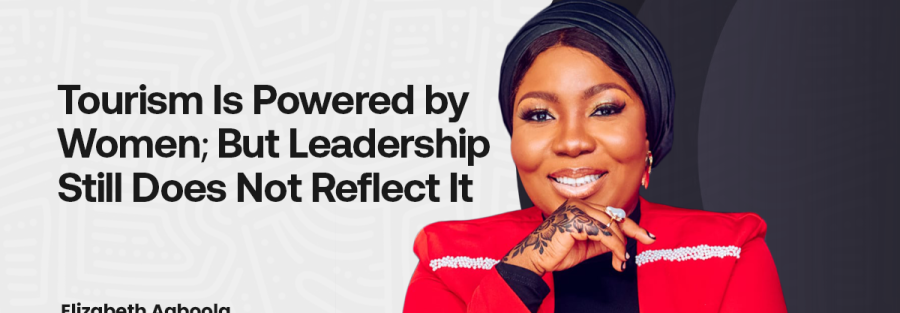
Across the global tourism industry, women are not a minority.
They are the majority. They operate hotels, coordinate experiences, manage travel services, build cultural products, and sustain informal tourism economies across cities and communities.
Tourism, in many ways, is already a women-powered industry. Yet when decisions are made around investment, policy, infrastructure, and global positioning leadership across the system does not consistently reflect this reality.
Participation Is Not the Problem
Women are present across tourism value chains.
They are:
- service providers
• entrepreneurs
• creative contributors
• operational leaders
In many destinations, they form the backbone of the sector’s day-to-day functioning.
However, participation at scale does not automatically translate into influence at scale
The Leadership Gap
There are important examples of women in global tourism leadership, including at the highest institutional levels.
But when viewed across the broader ecosystem national tourism boards, investment committees, aviation leadership, and large-scale tourism infrastructure women remain underrepresented.
This creates a structural imbalance: The people who sustain the industry are not proportionately represented among those shaping its direction.
Why This Matters Economically
Tourism is not a purely technical industry. It is a human-centered, experience-driven sector. This means leadership decisions are directly influenced by:
- cultural understanding
• consumer behaviour
• service expectations
• lived experience
When leadership structures do not reflect the diversity of the workforce and the market, the industry becomes:
- less responsive
• less innovative
• less competitive
This is not just a gender issue. It is an economic efficiency issue.
The Structural Constraints
The gap is not caused by a lack of capable women.
It is driven by structural limitations such as:
- limited access to capital for women-led tourism businesses
• weak leadership pipelines
• lack of structured mentorship
• underrepresentation in decision-making institutions
Without addressing these, participation will remain high, but influence will remain limited.
What Needs to Change
If tourism is to reach its full economic potential, three shifts are required.
- Leadership Pathways Must Be Intentional
Women should not have to rely on informal progression. There must be structured pathways from: entry-level participation to executive leadership.
- Capital Must Be Accessible
Tourism businesses led by women must be able to access:
- financing
• investment
• growth capital
Without this, participation cannot translate into scale.
- Networks Must Be Strengthened
Influence is often built through access. Women need structured platforms where they can:
- connect across industries
• collaborate across markets
• participate in high-level conversations
The Opportunity
Tourism remains one of the most accessible sectors for women’s economic participation globally. But if leadership structures evolve to reflect this participation, the impact could be significantly amplified.
This would not only improve inclusion. It would improve:
- product development
• service quality
• market expansion
• overall sector performance
Final Thought
Tourism is already powered by women. The next phase is ensuring that this power is reflected in how the industry is shaped, financed, and governed.
Because when leadership reflects reality, industries do not just grow. They perform.