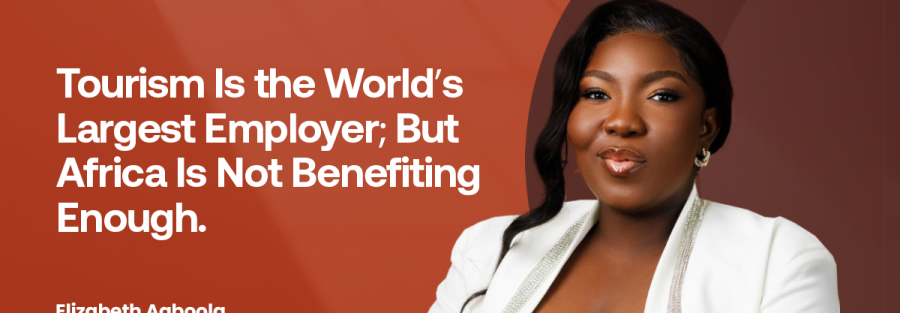
Tourism is often described as a lifestyle industry.
In reality, it is one of the largest employment systems in the global economy.
Globally, tourism supports over 1 in 10 jobs.
Across multiple economies, it is the fastest way to convert:
- culture into income
• movement into employment
• infrastructure into opportunity
Yet in Africa, and particularly in Nigeria, tourism remains one of the least structured employment sectors. This is not because of a lack of demand. It is because of a lack of systems.
The Employment Paradox
Nigeria has:
- a young population
• high unemployment
• strong cultural assets
• increasing global interest
Yet tourism has not been positioned as a formal employment engine.
Instead, it exists as:
- informal tour operations
• fragmented hospitality services
• event-based income cycles
• unstructured creative participation
This creates a paradox: Tourism is everywhere, but jobs are nowhere.
Tourism as an Employment System
To unlock tourism as a serious economic sector, it must be structured across three employment layers:
- Direct Employment
Hotels, airlines, tour companies, event companies. These are the visible jobs.
- Indirect Employment
Farmers supplying hotels. Designers creating cultural products.
Transport providers supporting mobility. This layer is often ignored, yet it is where scale sits.
- Induced Employment
When tourism income circulates:
- local markets grow
• SMEs expand
• new services emerge
This is where tourism becomes economic infrastructure.
What Is Missing
Tourism employment in Nigeria lacks:
- structured training pipelines
• industry standard certifications
• coordinated recruitment systems
• data on workforce demand
Without these, tourism cannot be taken seriously by:
- governments
• investors
• development institutions
The Shift Required
Tourism must move from: Activity to System, and also move from Informal participation
to Structured employment pathways.
This requires:
- tourism training linked directly to jobs
• partnerships between industry and institutions
• workforce data that informs policy
The Opportunity
Tourism is not just about travel. It is one of the fastest ways to absorb labour at scale, especially: youth, women, creatives. If structured properly, tourism can become:
Nigeria’s most accessible employment sector.
Final Thought
Africa does not lack jobs. It lacks systems that connect people to opportunity.
Tourism already has the demand. The next step is to build the workforce architecture that allows people to participate meaningfully.
Because until tourism is treated as an employment system,
it will remain an industry of activity, not impact.